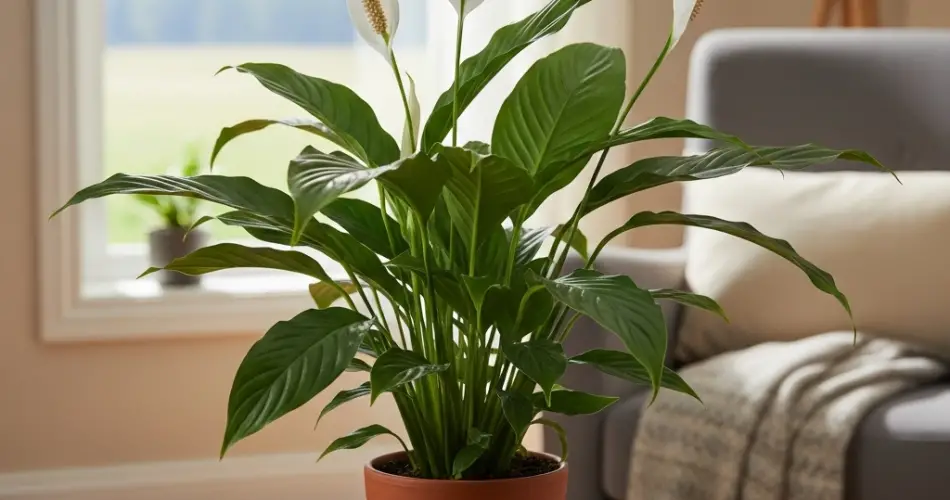
Why Direct Sunlight Is Harmful
One mistake many plant owners make is placing peace lilies in direct sunlight. Unlike succulents or flowering outdoor plants, peace lilies are sensitive to strong sun. Direct rays can scorch their leaves, leaving behind dry, brown patches.
The best placement is in filtered light—behind sheer curtains, a few feet away from a sunny window, or in a space that receives dappled light throughout the day.
Artificial Light as an Alternative
For homes or offices with little to no natural sunlight, peace lilies adapt well to artificial lighting. Fluorescent lights or full-spectrum grow lights can provide the energy they need for photosynthesis.
Fluorescent bulbs: Common in offices, they are sufficient to keep peace lilies alive and growing.
LED grow lights: If you want your plant to thrive and bloom, full-spectrum grow lights are a great option, as they mimic natural sunlight.
With consistent artificial light for 10–12 hours daily, peace lilies can grow well even in windowless rooms.
Tips for Caring for Peace Lilies in Low-Light Conditions
To ensure your peace lily remains healthy, especially in low-light environments, follow these tips:
Rotate the Plant: Turn the pot every few weeks so all sides receive equal exposure to available light.
Monitor for Leggy Growth: If the plant grows tall and spindly, it may be signaling that it needs more light.
Clean the Leaves: Dust can block light absorption. Wipe the leaves with a damp cloth to keep them glossy and efficient at photosynthesis.
Encourage Blooms with Extra Light: If your peace lily isn’t flowering, supplement natural light with a grow light for a few hours each day.
Water Moderately: Peace lilies prefer consistently moist soil but are sensitive to overwatering. Allow the top inch of soil to dry before watering again.
Check for Stress Signs: Yellowing leaves may indicate too much light, while drooping can signal underwatering or overwatering.
Benefits of Peace Lilies in Low-Light Homes
Peace lilies are not only adaptable to low light but also beneficial for indoor environments:
Air Purification: Studies by NASA have shown that peace lilies help filter toxins like benzene, formaldehyde, and trichloroethylene from indoor air.
Stress Reduction: Their lush foliage and white blooms create a calming atmosphere, reducing stress and improving indoor aesthetics.
Symbolic Meaning: Associated with peace, purity, and renewal, peace lilies are often kept in homes as symbols of balance and positivity.
These qualities make them especially appealing for households with limited sunlight.
Conclusion
Peace lilies cannot survive in complete darkness, but they are among the best plants for low-light environments. Their ability to thrive under indirect sunlight, fluorescent office lights, or supplemental grow lights makes them versatile choices for almost any indoor space.
While they may not bloom as abundantly in dim settings, their lush green leaves still bring beauty, tranquility, and health benefits to the home. For those looking to brighten shaded spaces or windowless rooms, the peace lily proves that even in low light, nature’s elegance can flourish.
