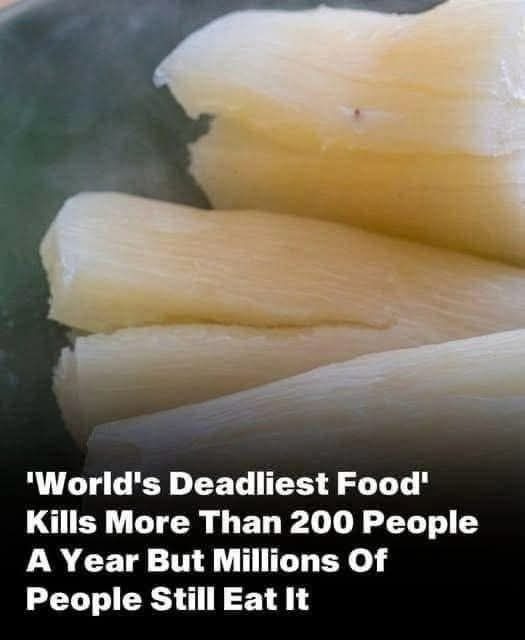
All cassava contains linamarin, a compound that breaks down into hydrogen cyanide when cells are damaged (e.g., during peeling, grating, or chewing).
If consumed raw or poorly processed, it can cause:
Acute cyanide poisoning (nausea, dizziness, seizures, death)
Chronic health issues like konzo — a paralyzing neurological disease linked to long-term cyanide exposure
Goiter and thyroid problems due to interference with iodine uptake
 According to WHO estimates, hundreds of non-fatal cases and dozens of deaths occur each year — mostly in sub-Saharan Africa during famines or droughts when traditional processing methods are skipped.
 Most deaths happen when people eat bitter cassava without soaking, fermenting, or cooking it properly.
 How Millions Eat Cassava Safely Every Day
For generations, cultures around the world have developed traditional methods to remove cyanide from cassava — turning a potentially dangerous food into a safe and reliable staple.
Safe Preparation Steps:
Peel the root – Toxins concentrate in the skin
Soak in water for 1–7 days – Fermentation helps break down linamarin
Grate, pound, or slice thin – Increases surface area for toxin removal
Cook thoroughly – Boiling, roasting, or frying neutralizes remaining cyanide
Dry in sunlight (for flour) – Sunlight accelerates detoxification
In West Africa, cassava is turned into gari or fufu
In South America, it becomes farofa or arepas
In Asia, it’s used in tapioca pearls and cassava cake
 These methods aren’t just tradition — they’re science in action.
 Why Cassava Matters Globally
Despite its risks, cassava is a critical food security crop because:
Grows in poor soil and with little water
Survives climate extremes better than wheat, rice, or corn
Provides affordable calories for low-income families
Can be stored in the ground for months
 With climate change threatening global agriculture, researchers are developing low-cyanide, high-yield varieties (like “Nam Dinh” in Vietnam or biofortified cassava in Nigeria).
 Debunking the Myths
“Cassava is poison”
False — only unsafe when improperly prepared
“Everyone who eats cassava is at risk”
No — most use time-tested methods to make it safe
“You should avoid it completely”
Unnecessary — store-bought tapioca, cassava flour, or frozen yuca is pre-processed and safe
“It has no nutrition”
Wrong — it provides energy, vitamin C, manganese, and some fiber (especially in sweet varieties)
Tips for Safe Consumption (Even Outside the Tropics)
If you’re buying cassava at a grocery store or using cassava-based products:
Always cook cassava before eating
Never eat raw
Buy pre-peeled, frozen, or dried versions
Already processed and safer
Ensure good ventilation when preparing large amounts
Cyanide gas can build up in enclosed spaces
Pair with protein-rich foods
Improves overall nutrition
Support sustainable cassava farming
Empowers smallholder farmers worldwide
 Note: Tapioca pearls (used in bubble tea) are highly processed and safe to consume.
Final Thoughts
You don’t need to fear cassava.
But you should respect it.
Like many powerful foods — from kidney beans to fugu fish — it teaches us a simple truth:
Nature provides nourishment — but safety comes from wisdom.
So whether you’re enjoying garri in Ghana, yuca fries in Colombia, or boba tea in Bangkok…
take a moment to appreciate the knowledge passed down through generations — making one of the world’s most resilient crops not just edible, but essential.
Because real food isn’t just fuel.
It’s culture, survival, and care — rooted deep in the earth and shared across continents.
