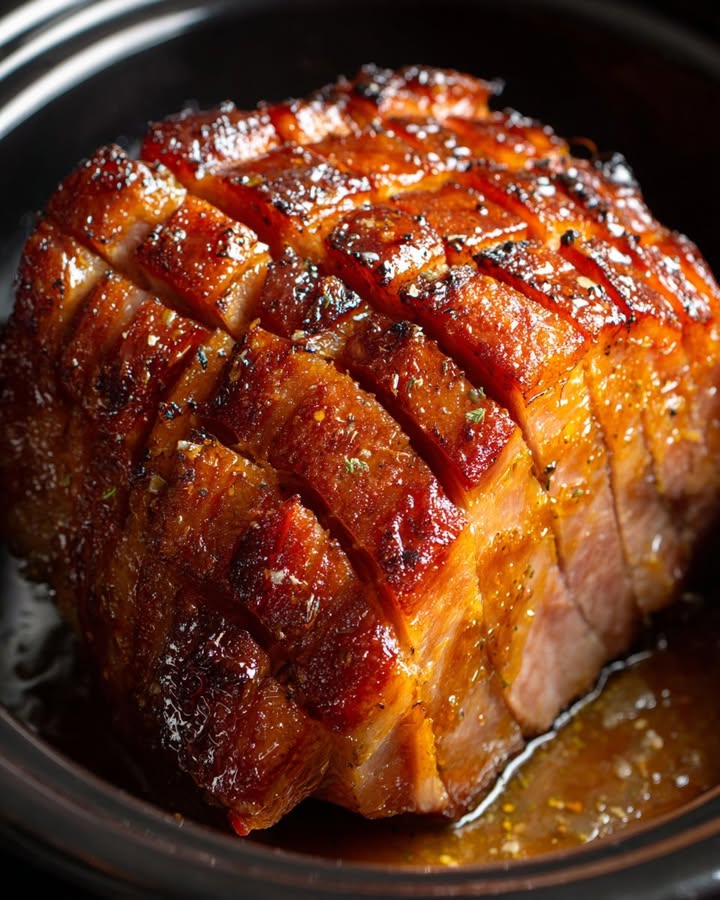
Prepare the ham: Unwrap the ham and discard any plastic or netting. Pat it dry with paper towels. If the fat cap is not already scored, use a sharp knife to gently score the surface in a crisscross diamond pattern, cutting about 1/4 inch deep. This helps the maple glaze soak in and gives that beautiful, ridged look when it’s finished.
Place ham in slow cooker: Set the ham cut-side down into a large slow cooker, nestling it in so it sits snugly. If the lid doesn’t quite close, you can trim a bit off the bottom or cover the top tightly with heavy-duty foil before setting the lid on.
Mix the glaze: In a small bowl or measuring cup, whisk together the maple syrup and your chosen seasoning—either coarse black pepper for a sweet-peppery finish or Dijon mustard for a mild tang that balances the sweetness. Taste and adjust the pepper or mustard to your liking.
Glaze the ham: Pour the maple mixture slowly over the ham, making sure to coat the top and let it run into the scored lines and down the sides. Use a spoon or brush to spread it around so the whole visible surface is covered. Any extra glaze will drip down and mingle with the ham juices as it cooks.
Slow cook: Cover and cook on LOW for 4–6 hours, or until the ham is heated through (140°F in the thickest part) and very tender. Baste the ham with the maple juices from the bottom of the slow cooker 2–3 times during cooking to build up that glossy, lacquered coating. As it cooks, the glaze will deepen in color to a rich amber-brown and thicken around the edges.
Optional thickened glaze: For an extra sticky finish, carefully ladle 1–1½ cups of the cooking liquid into a small saucepan about 20–30 minutes before serving. Simmer over medium heat, stirring often, until it reduces and thickens slightly into a syrupy glaze. Meanwhile, keep the ham covered on WARM in the slow cooker.
Finish and serve: Spoon or brush the thickened glaze back over the top of the ham, letting it cling to the scored fat and caramelized edges. Let the ham rest for about 10–15 minutes, then transfer it to a cutting board. Slice against the grain into thick or thin slices, and spoon a little of the syrupy cooking liquid over the top or serve it on the side for drizzling at the table.
Advertisement
Variations & Tips
• For picky eaters: If your crew isn’t a fan of pepper or mustard, you can simply use maple syrup and a pinch of salt as your third ingredient. The flavor will be pure, sweet, and mild, which is usually a hit with kids. You can also slice some of the ham plain before brushing on extra glaze for those who like it less saucy.• Slightly smoky version: Use freshly cracked black pepper as your third ingredient and add a tiny splash (1/4 teaspoon) of liquid smoke to the maple syrup if you have it on hand. This gives a gentle smoky note without adding more ingredients to the ham itself.• Mustard-maple twist: If your family likes a little tang, choose Dijon mustard as your third ingredient and whisk it into the maple syrup. You can also use a grainy mustard for a rustic look and a bit of texture on the surface of the ham.• Crispy edges finish: For extra caramelization, transfer the cooked ham to a baking dish, brush with some of the thickened glaze, and broil on the top rack of your oven for 3–5 minutes, watching closely. This gives those darker, slightly charred spots on the glaze that look and taste wonderful, just like a traditional baked ham.• Smaller slow cooker tip: If your ham is too tall for your slow cooker, cut off a large chunk from the bottom, tuck both pieces inside, and glaze them together. The smaller piece makes great early “taste tests” or can be saved just for sandwiches.• Leftover ideas: Use leftover slices in grilled ham and cheese sandwiches, dice it into scrambled eggs or breakfast burritos, or stir it into a pot of beans or split pea soup. You can also freeze leftover ham in small portions for quick weeknight meals later on.• Make-ahead tip: You can place the ham and maple mixture in the slow cooker insert, cover, and refrigerate overnight. In the morning, just pop the insert into the base and start cooking. This is especially helpful for busy holiday mornings when you want the main dish to take care of itself.
Resources
