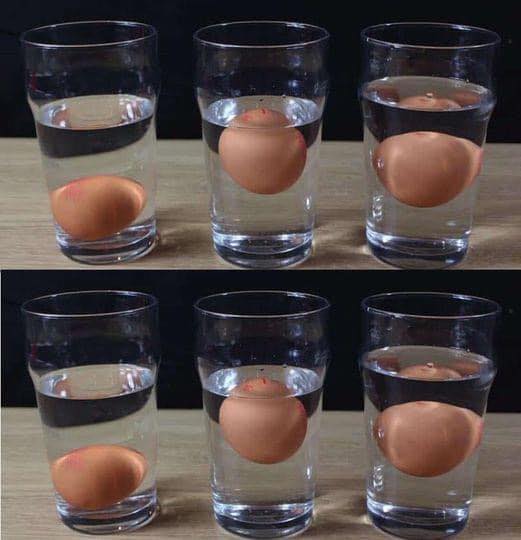
1. The Float Test (Most Popular)
How to do it:
- Fill a bowl or glass with cold water.
- Gently place the egg in the water.
Results:
- Fresh egg: Sinks and lies flat on the bottom.
- Slightly older (still good): Stands upright on the bottom.
- Rotten: Floats to the surface.
Why it works:
As an egg ages, air seeps through the shell, forming an air pocket. The bigger the pocket, the more it floats.

2. The Smell Test
How to do it:
- Crack the egg into a bowl and sniff.
Results:
- Fresh egg: Has no odor or a mild, neutral smell.
- Rotten egg: Has a strong sulfur or “rotten” smell — unmistakable and foul.
Tip: If it smells bad before cracking, discard it immediately.

3. The Visual Inspection
How to do it:
- Examine the shell before cracking.
Results:
- Fresh: Shell is clean, smooth, and not slimy.
- Rotten: Cracked, slimy, or powdery shells (which can mean bacteria or mold).
Inside:
After cracking, the white should be thick and the yolk round and well-centered. A watery white or flattened yolk indicates age.

4. The Shake Test
How to do it:
continued on the next page
