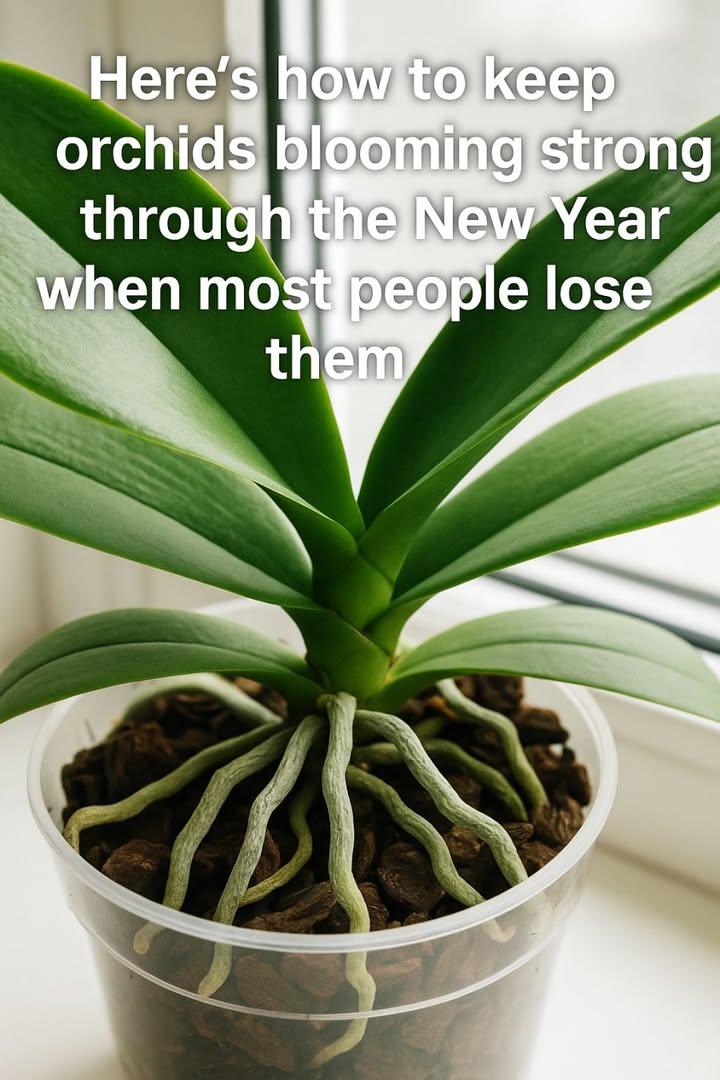
Dark green leaves (should be medium green).
Slow growth or flower buds dropping.
3. Watering: Don’t Overdo It
Overwatering is the most common cause of orchid failure.
a. Check Moisture Levels
Stick your finger into the medium 1–2 inches deep: it should feel slightly dry before watering.
Phalaenopsis prefer weekly watering, but this may vary by temperature and humidity.
b. Watering Technique
Use room temperature water.
Water thoroughly until it drains from the bottom.
Avoid letting water sit in the crown (center of leaves) to prevent rot.
c. Winter Considerations
Reduced light and cooler temperatures mean slower evaporation.
Water less frequently to avoid soggy roots.
4. Humidity: Mimicking the Tropics
Orchids thrive in humidity between 50–70%, often challenging indoors in winter.
a. Simple Humidity Solutions
Place orchids on a tray with pebbles and water, keeping the pot above water level.
Group multiple plants to create micro-humidity zones.
Use a humidifier in dry rooms.
b. Avoid Over-Humidifying
Standing water on leaves promotes fungal infections.
Ensure air circulation to prevent mold and rot.
5. Temperature: Maintaining Comfort Through Winter
Orchids are sensitive to temperature extremes.
a. Ideal Ranges
Daytime: 70–75°F (21–24°C)
Nighttime: 60–65°F (15–18°C)
b. Temperature Drop to Encourage Blooming
Phalaenopsis benefit from a 10–15°F difference between day and night for 2–3 weeks.
This mimics natural seasonal change and can stimulate flower spike growth.
c. Avoid Drafts and Heat Sources
Keep orchids away from heaters, vents, or cold drafts.
Sudden temperature swings can cause bud drop or leaf damage.
6. Fertilization: Feeding for Longevity
continued on next page
